Umrah Guide
Table of Contents
Umrah Guide Introduction
Umrah is an act of worship of Allah according to the teachings of the Holy Prophet (PBUH) carried out in the precinct of Masjid-al-Haram in Makkah. It is referred to as the ‘lesser’ or ‘minor’ pilgrimage in comparison to the ‘greater pilgrimage’ of Hajj and can be performed at any time of the year.
Once you have made the blessed decision, it’s time for you to plan how to reap maximum benefits and rewards by performing each ritual according to the Sunnah of the Holy Prophet (PBUH). Here we have compiled a comprehensive step-to-step Umrah guide to assist you and provide complete information before your departure on a spiritual journey.
Pillars of Umrah
There are four pillars of Umrah:
- Ihram
- Tawaf-ul-Kaabah
- Saa’i between Safa and Marwa
- Qasar / Halaq
Men are advised to walk briskly in the first three rounds, a practice referred to as ‘Raml’, and walk normally during the last four rounds. After completing seven rounds, follow these simple steps:
Salah Al-Tawaf-
The pilgrims should offer two rakahs nafal prayer behind Maqaam e Ibrahim but owing to the huge crowd, he/she can offer at any free spot in the mosque. During the first rakah, Surah Al-Kafirun is recited and for second rakah, Surah Al-Ikhlas is recited.
Zamzam-
After offering the Salah, head to the well of Zamzam water or any fountain within Masjid Al-Haram to drink it whilst standing and reciting supplications. You can recite this dua after drinking water:
O Allah! Grant me knowledge that’s beneficial, the provision that’s abundant, and the cure to every illness.
1. Ihram
Ihram is a sacred state of mind and body marked by an act of making a formal intention (Niyyah) for performing Umrah or Hajj. It is characterized by:
- Taking a proper bath (Ghusal) to wash away all impurities (menstruating women are also advised to take a bath).
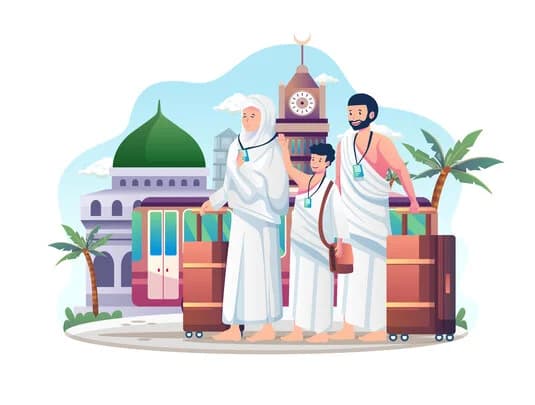
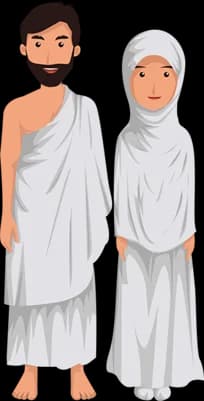
- Wearing Ihram sheets, i.e. men change into two white fabrics (Rida and Azaar) and women into any clothing that covers their body and head, revealing only their face and hands.
- Offering two rakahs of Nafal or obligatory prayer.
- With a face towards Qibla, declare your intention before entering Makkah. You will be notified by an announcement on an airplane on reaching Meeqat, the official location to start Ihram.
Following are the supplications to recite after making Niyyah for Ihram:
لَبَّيْكَ اللَّهُمَّ عُمْرَةً
Labbayka llāhumma 'umratan.
O Allah, here I am to perform Umrah.
اللَّهُمَّ إِنِّيْ أُرِيْدُ الْعُمْرَةَ
Allāhumma innī urīdu l-'umrata.
O Allah, I intend to perform Umrah.
اللَّهُمَّ إِنِّيْ أُرِيْدُ الْعُمْرَةَ فَيَسِّرْهَا لِيْ وَتَقَبَّلْهَا مِنِّيْ
Allāhumma innī urīdu l-'umrata fa yassirhā lī wa taqabbalhā minnī.
O Allah, I intend to perform Umrah, so accept it from me and make it easy for me. After this, recite Talbiyah till you are ready to perform Tawaf.
لَبَّيْكَ اللهُمَّ لَبَّيْكَ – لَبَّيْكَ لَا شَرِيْكَ لَكَ لَبَّيْكَ – إِنَّ الْحَمْدَ وَالنِّعْمَةَ لَكَ وَالْمُلْكَ – لَا شَرِيْكَ لَكَ –
Labbayka Allaahumma labbayk, labbayka laa shareeka laka labbayk. Inna al-hamd wa'l-ni'mata laka wa'l-mulk, laa shareeka lak.
Here I am, O Allah, here I am. Here I am, You have no partner, here I am. Verily all praise and blessings are Yours, and all sovereignty, You have no partner.
Restrictions of Ihram
- Cutting and plucking nails and hair
- Use of perfumes, scented soaps, and shampoos on the body
- Engaging in any sexual activity
- Killing or hunting animals
- Using abusive language
- Initiating any fight with fellow people
2. Tawaf
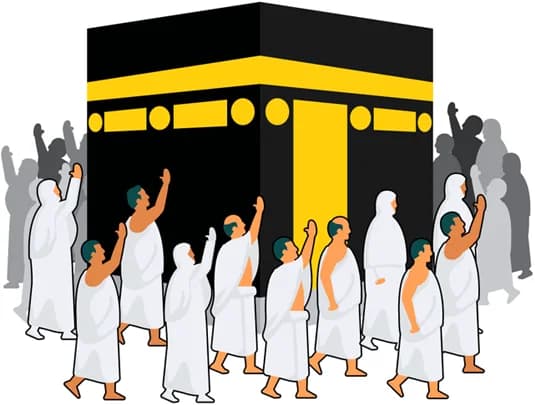
Tawaf is the ritual of circling the Kaabah seven times in an anti-clockwise direction. Pilgrims must have performed ablution before starting the rounds. Men are advised to leave their right shoulder bare only during Tawaf, a practice known as Idtibaa. Menstruating women are not allowed to perform Tawaf.
Start at the Black Stone (Hajr e Aswad), either:
- Kiss it if you can.
- If not, touch it with your right hand and kiss it.
- If not, face the Black Stone, point to it with your right hand and say "Allahu Akbar".
Men are advised to walk briskly in the first three rounds, a practice referred to as 'Raml', and walk normally during the last four rounds. After completing seven rounds, follow these simple steps:
Salah Al-Tawaf
The pilgrims should offer two rakahs of nafal prayer behind Maqaam e Ibrahim, but owing to the huge crowd, they can offer it at any free spot in the mosque. During the first rakah, Surah Al-Kafirun is recited, and for the second rakah, Surah Al-Ikhlas is recited.
Zamzam
After offering the Salah, head to the well of Zamzam water or any fountain within Masjid Al-Haram to drink it while standing and reciting supplications. You can recite this dua after drinking water:
اللَّهُمَّ إِنِّي أَسْأَلُكَ عِلْمَاً نَافِعَاً وَرِزْقَاً وَاسِعَاً وَشِفَاءً مِنْ كُلِّ دَاءٍ
O Allah! Grant me knowledge that's beneficial, provision that's abundant, and a cure for every illness.
3. Sa'i Between Safa and Marwa
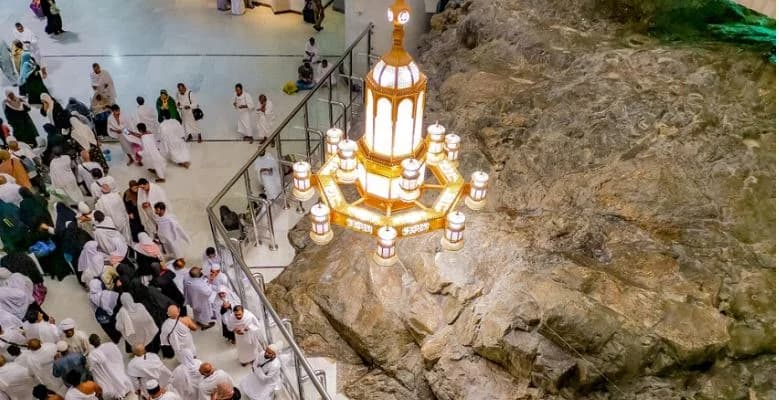
Sa'i is the practice of walking or running seven times between the two hills Safa and Marwa to commemorate Hazrat Hajra (AS) searching for water for her son, Hazrat Ismail (AS). The following dua is recited to start the Sa'i:
نَبْدَأُ بِمَا بَدَأَ اللَّهُ بِه
I begin with what Allah began with.
Pilgrims should start by climbing Safa hill (choosing a point from where the Ka'bah is visible) and recite supplications, and are free to make their personal duas. The trip from Safa to Marwa counts as one round, and from Marwa to Safa as another, and it can be performed without ablution — so menstruating women should also perform Sa'i to complete their Umrah. You can recite the following dua:
لاَ إِلَهَ إِلاَّ اللَّهُ وَحْدَهُ لاَ شَرِيْكَ لَه، لَهُ الْمُلْكُ وَ لَهُ الْحَمْدُ يُحْيِي وَ يُمِيْتُ وَ هُوَ عَلَى كُلِّ شَيْءٍ قَدِيْر؛ لاَ إِلَهَ إِلاَّ اللَّهُ وَحْدَهُ لاَ شَرِيْكَ لَه، أَنْجَزَ وَعْدَهُ وَ نَصَرَ عَبْدَهُ وَ هَزَمَ الأَحْزَابَ وَ حْدَه
There is nothing worthy of worship except Allah, alone. He has no partner. To Him belongs the kingdom, and all praise belongs to Him, and He has power above all things. There is nothing worthy of worship except Allah; He fulfilled His promise, granted victory to His servant, and alone He defeated the allied army.
The walking area is highlighted by green fluorescent lights so men can walk briskly at a medium pace, while women are advised to walk at a normal pace. The seventh round is completed at Marwa hill, where it is customary to offer two rakahs of Salah to mark the completion of Sa'i.
4. Halq or Taqsir
Halq refers to shaving the head, whereas Taqsir means trimming the hair. After completing the seven rounds of Sa'i, it is a mandatory step to shave your head to exit the state of Ihram. Men are advised to trim their hair to fingertip length from each side or shave their heads completely. Women just need to trim a fingertip length from the end of their hair, regardless of how short it is.
Ihram officially ends after the completion of Halq/Taqsir, lifting all the restrictions implemented before and allowing you to change into your casual clothes. Your Umrah ends here — may Allah purify your intentions and accept your duas and good deeds.
Hopefully, this article provided you with all the information to let you complete your Umrah according to Prophetic Sunnah (SAW). May Allah accept it all, Ameen.